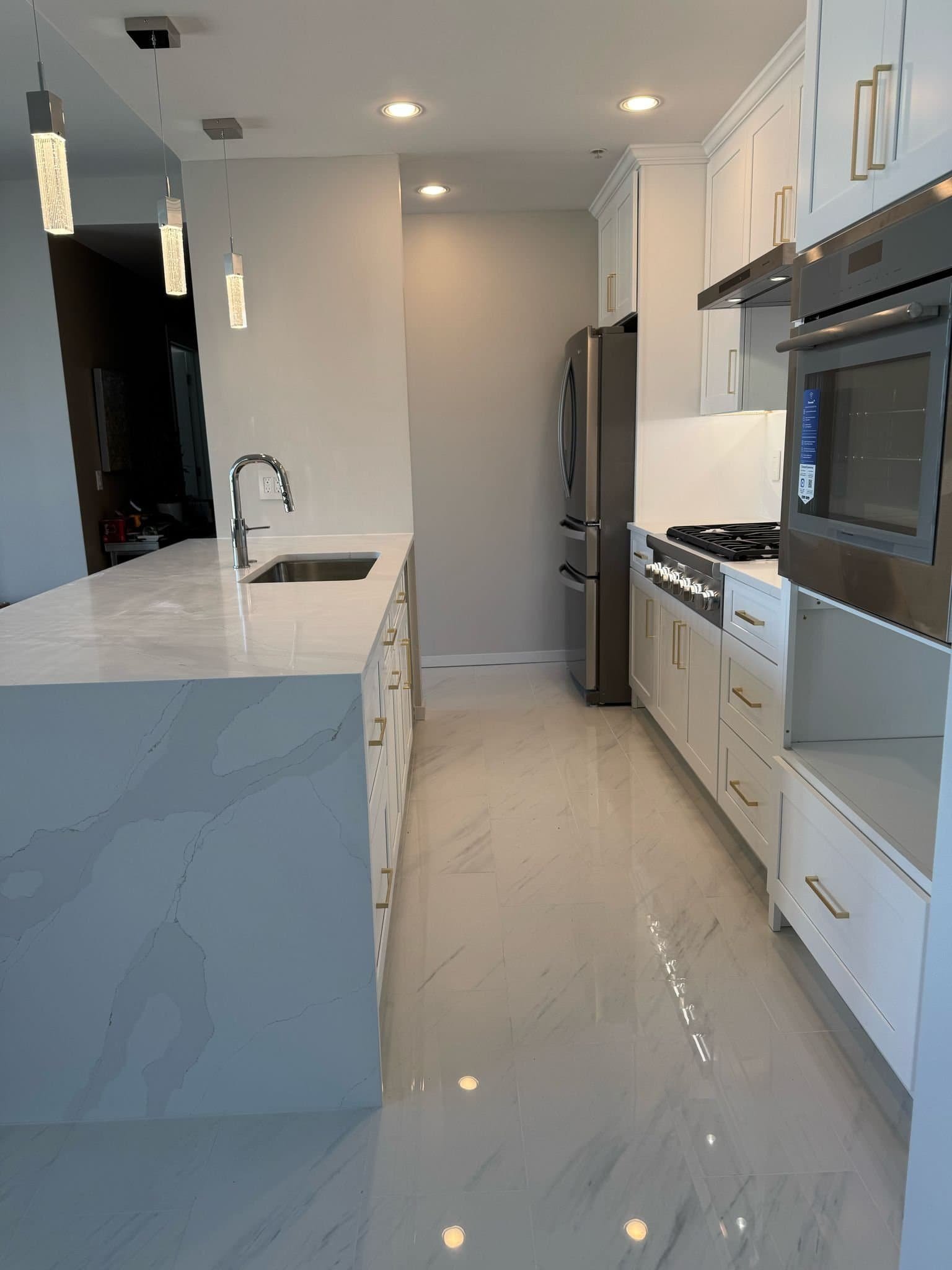
Kitchen Remodeling Cost Seattle (2026 Guide) | Sea Renovation

Summary:

Kitchen remodeling in Seattle typically costs between $15,000 and $60,000, though full-scale luxury projects can exceed $100,000. Minor updates like refacing cabinets and new countertops usually land under $25,000, while major renovations with layout changes and high-end appliances often range from $30,000 to $60,000. Because of the city’s older housing stock and higher labor rates, local projects generally cost 15% to 25% more than the national average. Homeowners should expect a 4 to 14-week construction period and keep a 20% contingency fund for common issues like outdated wiring or hidden moisture damage.
Table of contents

How Much Does Kitchen Remodeling Cost in Seattle? (2026 Guide)

If you’re a Seattle homeowner thinking about remodeling your kitchen, the first question on your mind is probably: how much is this actually going to cost me? It’s a fair question, and the honest answer is that kitchen remodeling cost in Seattle depends on dozens of variables, from the size of your kitchen to the materials you choose and the complexity of the work involved. National averages can give you a rough starting point, but they don’t reflect the realities of living and building in the Pacific Northwest. Seattle’s construction market, permit requirements, and housing stock all play a role in what you’ll actually pay. A cosmetic refresh with new cabinet fronts and countertops might run $15,000 to $25,000, while a full gut-and-rebuild with custom finishes can easily exceed $100,000. This guide breaks down every major cost category, explains what drives prices up (and where you can save), and provides Seattle-specific context that generic cost calculators miss. Whether you’re updating a 1940s Craftsman bungalow or modernizing a 1990s Colonial, you’ll walk away with a realistic picture of what your kitchen remodel will cost and how to budget for it.

Average Kitchen Remodeling Costs by Scope

Kitchen remodels fall into three broad categories based on scope. Understanding where your project fits helps you set the right expectations from the start.

Minor Remodel: $15,000 to $25,000

A minor kitchen remodel focuses on cosmetic improvements without changing the room’s footprint or layout. You’re keeping the existing plumbing and electrical in place and refreshing what’s visible.

Typical work in this range includes:

  • Refacing or painting existing cabinets
  • Replacing countertops with mid-range materials like quartz or butcher block
  • Installing a new tile backsplash
  • Upgrading to new hardware (pulls, knobs, hinges)
  • Swapping out an outdated faucet and sink
  • Replacing light fixtures
  • New flooring over the existing subfloor

This is the sweet spot for homeowners who like their kitchen’s layout but want a fresher, more modern look. Because you’re not moving plumbing or walls, labor costs stay lower and the timeline is shorter, usually four to six weeks.

Major Remodel: $30,000 to $60,000

A major remodel involves partial layout changes, new cabinetry, upgraded appliances, and potentially moving a sink or adding an island. This is where most Seattle homeowners land when they want a kitchen that truly functions better.

At this level, expect:

  • Brand-new semi-custom or custom cabinets
  • Stone countertops (quartz, granite, or marble)
  • New mid-range to high-end appliances
  • Relocated plumbing for a new sink or dishwasher position
  • Updated electrical with additional outlets and improved lighting
  • New flooring throughout the kitchen
  • Fresh drywall, paint, and trim
  • Possible removal of a non-load-bearing wall

Major remodels typically take eight to fourteen weeks from demolition to final walkthrough. If you’re planning a project in this range, our kitchen remodeling team in Seattle can walk you through design options during a free consultation.

Luxury Remodel: $60,000 to $100,000+

A luxury remodel is a complete transformation. You’re redesigning the kitchen from the studs out, choosing premium materials, and creating a space that looks and feels custom-built.

Luxury projects typically include:

  • Fully custom cabinetry with soft-close mechanisms and interior organizers
  • High-end stone countertops (quartzite, exotic granite, or marble slab)
  • Professional-grade appliances (Sub-Zero, Wolf, Thermador, Miele)
  • Structural changes like removing load-bearing walls (with engineer-designed headers)
  • Custom lighting design with layered ambient, task, and accent fixtures
  • Premium tile or hardwood flooring
  • Built-in pantry, beverage station, or butler’s pantry
  • Smart home integration (touchless faucets, connected appliances, under-cabinet USB outlets)

These projects often run twelve to twenty weeks or more, depending on material lead times and the complexity of structural work.

Cost Breakdown by Component: Where Does Your Money Actually Go?

One of the most common questions we hear is: how much does a kitchen remodel cost for each individual piece? Here’s a detailed look at each major component and what you should expect to pay in the Seattle market.

Cabinets: $5,000 to $30,000+

Cabinets eat up the biggest chunk of most kitchen budgets, typically 25% to 35% of the total project. Stock cabinets from big-box stores start around $5,000 for a standard-sized kitchen. Semi-custom cabinets with more finish options and sizing flexibility run $10,000 to $18,000. Fully custom cabinetry, built to your exact specifications, starts around $20,000 and can exceed $30,000 for large kitchens with specialty features.

If your existing cabinet boxes are solid, refacing your cabinets (replacing doors and drawer fronts while keeping the boxes) can save 30% to 50% compared to full replacement.

Countertops: $2,000 to $10,000+

Countertop costs depend heavily on the material you choose and the total square footage. Here’s what you’ll pay per square foot, installed, in Seattle:

Material Installed cost (per sq ft)
Laminate $20 to $50
Butcher block $40 to $70
Quartz $60 to $120
Granite $50 to $150
Marble $75 to $200
Quartzite $80 to $200

For a kitchen with 40 to 50 square feet of countertop space (including an island), quartz runs roughly $3,000 to $6,000 installed. Marble or quartzite for the same area could hit $8,000 to $10,000.

Appliances: $3,000 to $20,000+

A standard appliance package (refrigerator, range, dishwasher, microwave, and range hood) from a mid-range brand like KitchenAid or Samsung costs between $3,000 and $8,000. Step up to premium brands like Bosch or Café, and you’re looking at $8,000 to $14,000. Professional-grade brands push the total above $20,000.

Keep in mind that switching from an electric range to gas (or vice versa) adds plumbing or electrical work, which increases installation costs by $500 to $2,000.

Flooring: $1,500 to $7,000

Kitchen flooring takes a beating, so durability matters as much as appearance. Common options for Seattle kitchens include:

  • Luxury vinyl plank (LVP): $4 to $8 per sq ft installed, waterproof and low-maintenance
  • Porcelain tile: $8 to $15 per sq ft installed, excellent moisture resistance
  • Hardwood: $10 to $18 per sq ft installed, warm and classic
  • Natural stone tile: $15 to $30 per sq ft installed, premium look

For a 150-square-foot kitchen, expect to spend $1,500 to $4,500 on most mid-range options.

Labor: 30% to 40% of Total Budget

Labor is typically the second-largest expense after cabinets. In Seattle’s market, skilled tradespeople command higher rates than the national average. General carpentry, demolition, and installation work runs $50 to $85 per hour. Specialty trades (electricians, plumbers, tile setters) charge $85 to $150 per hour.

For a major remodel, labor alone often totals $12,000 to $25,000. The best way to manage labor costs isn’t to find the cheapest crew; it’s to have a clear plan and minimize mid-project changes that cause delays and rework.

Plumbing: $1,500 to $5,000

If you’re keeping the sink and dishwasher in their current locations, plumbing costs stay minimal ($1,500 to $2,500 for new fixture installation). Relocating a sink, adding a pot filler, or moving a dishwasher to a new position involves rerouting supply and drain lines, pushing costs to $3,000 to $5,000 or more.

Electrical: $1,500 to $5,000

Most kitchen remodels require some electrical work, even if it’s just adding outlets to meet current code. Upgrading to meet Seattle’s building codes typically includes adding GFCI outlets near water sources, installing dedicated circuits for heavy appliances, and updating lighting. A full electrical overhaul (new wiring, panel upgrade, recessed lighting throughout) can hit $5,000.

Component Cost Summary Table

Component Cost Range (Seattle) % of Total Budget
Cabinets $5,000 – $30,000+ 25% – 35%
Countertops $2,000 – $10,000+ 10% – 15%
Appliances $3,000 – $20,000+ 10% – 20%
Flooring $1,500 – $7,000 5% – 10%
Labor $12,000 – $25,000 30% – 40%
Plumbing $1,500 – $5,000 5% – 8%
Electrical $1,500 – $5,000 5% – 8%
Permits & Design $500 – $3,000 2% – 5%
Total (Major Remodel) $30,000 – $60,000 100%

Seattle-Specific Factors That Affect Kitchen Renovation Costs

Generic cost guides don’t account for what makes building in Seattle different. Here are the local factors that directly impact your kitchen renovation cost in Seattle.

Older Homes and Hidden Structural Issues

Seattle has a high concentration of homes built before 1960, especially in neighborhoods like Ballard, Capitol Hill, Wallingford, and Ravenna. Once you open up the walls in one of these older homes, you may discover:

  • Outdated wiring: Knob-and-tube wiring is still present in many pre-1950 Seattle homes and must be replaced when exposed during a remodel
  • Galvanized plumbing: Old galvanized steel pipes corrode from the inside and should be replaced with copper or PEX during a kitchen renovation
  • Asbestos: Floor tiles, pipe insulation, and even some wall textures in homes built before 1980 may contain asbestos, requiring professional abatement ($2,000 to $5,000)
  • Water damage: Seattle’s persistent moisture can cause hidden rot in subfloors and wall framing, especially under sinks and near exterior walls
  • Undersized floor joists: Some older homes have framing that doesn’t support the weight of modern stone countertops or large islands without reinforcement

These discoveries aren’t rare. They’re practically routine in older Seattle homes, which is why building a contingency fund into your budget is essential (more on that below).

Permit Requirements and Approval Timelines

The City of Seattle’s Department of Construction and Inspections (SDCI) requires permits for most kitchen remodels that involve structural changes, electrical work, plumbing modifications, or gas line alterations. Permit fees typically run $300 to $2,000 depending on the scope of work.

What catches many homeowners off guard is the timeline. Simple permits for straightforward electrical or plumbing work can be processed in one to three weeks. More complex projects requiring plan review, especially those involving structural modifications, can take four to eight weeks for approval. Your general contractor should handle the permit process, but it’s important to factor this waiting period into your project timeline.

Seattle Labor Costs

Construction labor costs in the Seattle metro area run 15% to 25% higher than the national average. This reflects the city’s higher cost of living, strong demand for skilled trades, and Washington State’s prevailing wage requirements on certain projects. Expect to pay more for licensed electricians, plumbers, and experienced finish carpenters than you’d see quoted in cost guides based on national data.

That said, paying for experienced, licensed contractors protects you from costly mistakes. An improperly installed plumbing connection or code-violating electrical work can cost far more to fix than the premium you paid for a qualified tradesperson.

Material Availability and Lead Times

Supply chain fluctuations still affect the Seattle construction market. Custom cabinetry can have lead times of six to twelve weeks. Specialty countertop slabs may need to be sourced from fabricators across the region. Certain European appliance brands occasionally face backorder delays of two to four months.

Planning ahead and locking in material orders early is one of the most effective ways to keep your project on schedule and within budget.

Kitchen Remodel Timeline: How Long Does It Take?

Understanding how long a kitchen remodel takes helps you plan around disruptions to your daily routine. Here’s a realistic breakdown by project phase.

Planning and Design: 2 to 6 Weeks

This phase covers your initial consultation, kitchen measurements, layout design, material selection, and finalizing a contract. For major remodels, allow four to six weeks to make thoughtful decisions you won’t regret later. Minor cosmetic updates can move through planning in two to three weeks.

Permits: 1 to 8 Weeks

As noted above, Seattle permit timelines vary widely. A minor electrical permit might take a week. A full plan review for a structural remodel could take two months. Your contractor should submit permits as early as possible to avoid holding up construction.

Construction: 4 to 14 Weeks

Construction timelines break down roughly like this:

  • Demolition: 2 to 5 days
  • Rough plumbing and electrical: 1 to 2 weeks
  • Framing and drywall (if walls are moved): 1 to 2 weeks
  • Cabinet installation: 1 to 2 weeks
  • Countertop templating and installation: 1 to 2 weeks (countertops are templated after cabinets are in, then fabricated and installed)
  • Flooring: 3 to 5 days
  • Backsplash and finish work: 3 to 7 days
  • Appliance installation and final connections: 1 to 3 days
  • Final inspection and walkthrough: 1 to 2 days

A minor remodel with no layout changes can wrap up in four to six weeks of construction time. A major remodel typically takes eight to fourteen weeks. Luxury remodels with structural changes may stretch to sixteen weeks or longer.

If you’re wondering how to manage daily life during this process, we’ve put together a practical guide on how to live in your house during a major kitchen renovation.

Factors That Can Extend Your Timeline

  • Change orders: Deciding to switch your countertop material or add a pot filler mid-project can add weeks
  • Material delays: Backordered appliances or custom cabinet delays ripple through the entire schedule
  • Permit delays: SDCI backlogs can slow down the start of construction
  • Unexpected discoveries: Finding mold, asbestos, or failing framing behind walls adds remediation time
  • Seasonal demand: Summer is peak construction season in Seattle. Starting in late fall or winter often means faster contractor availability

Homeowner reviewing kitchen renovation plans with contractor at a table covered with material samples and blueprints

How to Budget for a Kitchen Remodel

Building a realistic kitchen remodel budget starts with honest priorities and a few smart strategies. Here’s how to approach it.

Set Your Priorities First

Before you look at a single countertop sample, write down what matters most to you. Is it more storage? Better workflow? An open-concept layout for entertaining? A specific look or aesthetic? Knowing your top two or three priorities helps you direct the budget toward the things that will make the biggest difference in your daily life, rather than spreading dollars thin across everything.

Use the Budget Percentage Rule

A common guideline is to spend 5% to 15% of your home’s value on a kitchen remodel. For a Seattle home valued at $750,000, that translates to $37,500 to $112,500. This range ensures you’re investing enough to see meaningful improvements without over-improving for your neighborhood.

Allocate your budget roughly like this:

  • Cabinets and hardware: 25% to 35%
  • Labor and installation: 30% to 40%
  • Countertops: 10% to 15%
  • Appliances: 10% to 20%
  • Flooring: 5% to 10%
  • Lighting and electrical: 3% to 5%
  • Plumbing and fixtures: 3% to 5%
  • Design, permits, and miscellaneous: 5% to 10%

Always Plan for Contingency: 10% to 20%

No kitchen remodel goes exactly according to plan. Set aside 10% to 20% of your total budget as a contingency fund. For a $50,000 project, that means keeping $5,000 to $10,000 in reserve.

If you’re remodeling a home built before 1970, lean toward 20%. Older Seattle homes are more likely to reveal hidden issues once demolition begins. If your home is newer and you’re making mostly cosmetic changes, 10% is usually sufficient.

Where to Save vs. Where to Invest

Worth spending more on:

  • Cabinets: You’ll interact with them dozens of times a day. Quality construction, smooth drawer slides, and durable finishes make a noticeable difference
  • Countertops: Visible, heavily used, and hard to replace later. Choose a material you’ll be happy with for 15+ years
  • Layout and design: Getting the workflow right from the start saves frustration for the life of the kitchen
  • Skilled labor: Experienced tradespeople do better work, faster, with fewer callbacks

Good places to save:

  • Hardware: Cabinet pulls and knobs can be swapped easily and cheaply. Start with a mid-range option and upgrade later if you want
  • Backsplash: Subway tile looks great and costs a fraction of hand-painted or large-format porcelain tile
  • Appliances: Unless you cook professionally, mid-range appliances from brands like Bosch, KitchenAid, or Whirlpool perform excellently at a fraction of the pro-grade price
  • Light fixtures: Plenty of stylish, affordable options exist. Save the splurge for your main pendant or chandelier and use simple recessed cans everywhere else

If you’re also considering other projects while contractors are already in your home, bundling work like a bathroom remodel can save on mobilization costs and general conditions.

Frequently Asked Questions About Kitchen Remodeling Costs in Seattle

How much does a kitchen remodel cost in Seattle?

The cost depends on the scope of your project. A minor cosmetic remodel in Seattle typically costs $15,000 to $25,000. A major remodel with new cabinets, countertops, and layout changes runs $30,000 to $60,000. Luxury remodels with premium materials and structural modifications can exceed $100,000. Seattle’s higher labor rates and older housing stock often push costs 15% to 25% above national averages.

What is the most expensive part of a kitchen remodel?

Cabinets and labor are consistently the two biggest expenses. Cabinets alone account for 25% to 35% of most budgets, and labor (including installation, plumbing, and electrical work) makes up another 30% to 40%. Together, these two categories represent roughly 60% to 70% of your total spend.

Can I remodel a kitchen on a budget?

Yes. Focus on the changes that deliver the most visual and functional impact for the least money. Painting or refacing existing cabinets, adding a new countertop, replacing hardware, and updating lighting can transform the look of a kitchen for $15,000 to $20,000. Keeping plumbing and electrical in their current locations eliminates two of the biggest cost drivers.

How long does a kitchen remodel take in Seattle?

A minor cosmetic remodel takes four to six weeks of construction time. A major remodel runs eight to fourteen weeks. When you include the planning, design, and permit phases, total project duration from initial consultation to final walkthrough is typically three to five months for most mid-range projects.

Is a kitchen remodel worth the investment?

In most cases, yes. According to industry data, mid-range kitchen remodels recoup approximately 60% to 75% of their cost at resale. Beyond the financial return, a well-designed kitchen improves daily quality of life, reduces frustration with a poorly functioning layout, and makes your home more enjoyable to live in. In Seattle’s competitive housing market, an updated kitchen can also help your home sell faster.

Do I need a permit to remodel my kitchen in Seattle?

You need a permit for any work involving structural changes, electrical modifications, plumbing alterations, or gas line work. Cosmetic-only changes like painting, replacing countertops, or swapping out a faucet generally don’t require permits. Your contractor should advise you on which permits are needed and handle the application process through SDCI.

When is the best time of year to remodel a kitchen in Seattle?

Late fall and winter (October through February) often offer better contractor availability and sometimes more competitive pricing, since summer is peak construction season in the Pacific Northwest. However, the best time to start planning is three to six months before you want construction to begin, especially if your project involves custom cabinetry or specialty materials with long lead times.

Article details:

Share: