Best Deck Materials for Seattle’s Climate | Sea Renovation

Summary:

Choosing the right deck material in Seattle requires balancing high humidity with maintenance needs. Composite decking is the most durable choice for the Pacific Northwest, as it resists rot and avoids the warping common with persistent rain. Western red cedar offers natural beauty and decay resistance but needs regular sealing to prevent moisture damage. Pressure-treated lumber is the most affordable option, though it is more likely to splinter and twist in wet conditions. For the best value, many homeowners use treated wood for the structural frame and composite or cedar for the visible surface.
Table of contents

Best Deck Materials for Seattle's Climate: Cedar vs Composite vs Treated

If you’re a Seattle homeowner planning a new deck, the single most important decision you’ll make isn’t the layout or the railing style. It’s the decking material. Choosing the best deck material in Seattle means thinking beyond color swatches and price tags. The Pacific Northwest throws everything it has at outdoor structures: nine months of rain, summer UV bursts, constant humidity, and the ever-present threat of moss creeping across every surface. Choosing the best deck material for Seattle means finding something that can handle all of it without falling apart in five years or draining your weekends with maintenance. This guide breaks down the three most common decking options for PNW homeowners: western red cedar, composite decking, and pressure-treated lumber. We’ll cover real costs, honest lifespans, maintenance demands, and which material makes the most sense for your budget and lifestyle. Whether you’re building from scratch or replacing a worn-out deck, you’ll leave here knowing exactly which direction to go.

Why Material Choice Matters in the Pacific Northwest

What Seattle Weather Does to Your Deck

Seattle averages around 152 rainy days per year. That’s not a typo. Your deck sits through roughly five months of consistent rainfall between October and March, plus sporadic showers in spring and fall. But rain is just one piece of the puzzle.

Here’s what your deck material has to survive in this region:

  • Persistent moisture. It’s not just rain; the relative humidity in Seattle regularly sits between 70% and 85%. Wood-based materials absorb that moisture, which leads to swelling, warping, and accelerated decay if they’re not properly treated or naturally resistant.
  • Moss and mildew growth. The combination of shade, moisture, and mild temperatures creates a paradise for moss, algae, and mildew. These organisms don’t just look bad; they make deck surfaces slippery and can break down wood fibers over time.
  • Summer UV exposure. July and August bring long, sunny days with real UV intensity. Materials that aren’t UV-resistant will fade, dry out, and crack during these warmer months, especially after absorbing moisture all winter.
  • Temperature swings. While Seattle doesn’t get extreme cold, the shift from damp 40°F winters to dry 85°F summers creates expansion and contraction cycles that stress fasteners and material joints.

When you’re selecting deck materials for rain and year-round moisture exposure, these environmental factors should drive the decision, not just aesthetics or upfront price. A material that performs beautifully in Arizona might deteriorate rapidly here. That’s why local experience matters, and it’s worth working with Seattle deck builders who understand how these conditions affect each material over time.

Cedar Decking: Pros, Cons, Cost, Lifespan, and Maintenance

Western red cedar has been the go-to decking material in the Pacific Northwest for decades, and for good reason. It grows locally, it looks gorgeous, and it has natural properties that make it better suited to wet climates than most other woods.

Why Cedar Works Well in Seattle

Cedar contains natural oils called thujaplicins that resist rot, decay, and insect damage. Unlike many hardwoods, cedar doesn’t need chemical treatment to hold up against moisture. It’s also dimensionally stable, meaning it resists warping and cupping better than other softwoods when exposed to Seattle’s wet/dry cycles.

There’s also the look. Cedar has a warm, reddish-brown tone with tight, attractive grain patterns that give a deck real character. Many homeowners choose cedar specifically because they want that natural wood aesthetic that blends with the PNW landscape.

Advantages of Cedar Decking

  • Natural rot and insect resistance without chemical preservatives
  • Beautiful appearance with warm tones and distinctive grain
  • Lightweight compared to treated lumber, making installation easier
  • Comfortable underfoot because it doesn’t retain as much heat as composite
  • Environmentally friendly since it’s a renewable, locally sourced material
  • Takes stain and sealant well, allowing you to customize the color

Disadvantages of Cedar Decking

  • Requires regular maintenance. You’ll need to clean, sand, and reseal or restain your cedar deck every 1 to 3 years to keep it protected and looking its best.
  • Fades without treatment. Left untreated, cedar weathers to a silver-gray. Some people like this look; most don’t.
  • Softer wood. Cedar dents and scratches more easily than composite. Heavy furniture, pet claws, and dropped tools leave marks.
  • Cost variability. High-grade, clear cedar has become significantly more expensive in recent years, and lower grades may have more knots and imperfections.
  • Shorter lifespan than composite if maintenance is neglected.

Cost, Lifespan, and Maintenance Summary

Installed cost $28 to $42 per square foot (materials and labor)
Expected lifespan 15 to 25 years with proper maintenance
Maintenance Annual cleaning, restaining or resealing every 1 to 3 years, periodic board replacement

Cedar is an excellent choice if you value natural beauty and you’re willing to invest time in upkeep. If you skip the maintenance, expect the lifespan to drop significantly, sometimes to as little as 10 years in Seattle’s damp conditions.

Composite Decking: Pros, Cons, Cost, Lifespan, and Brands

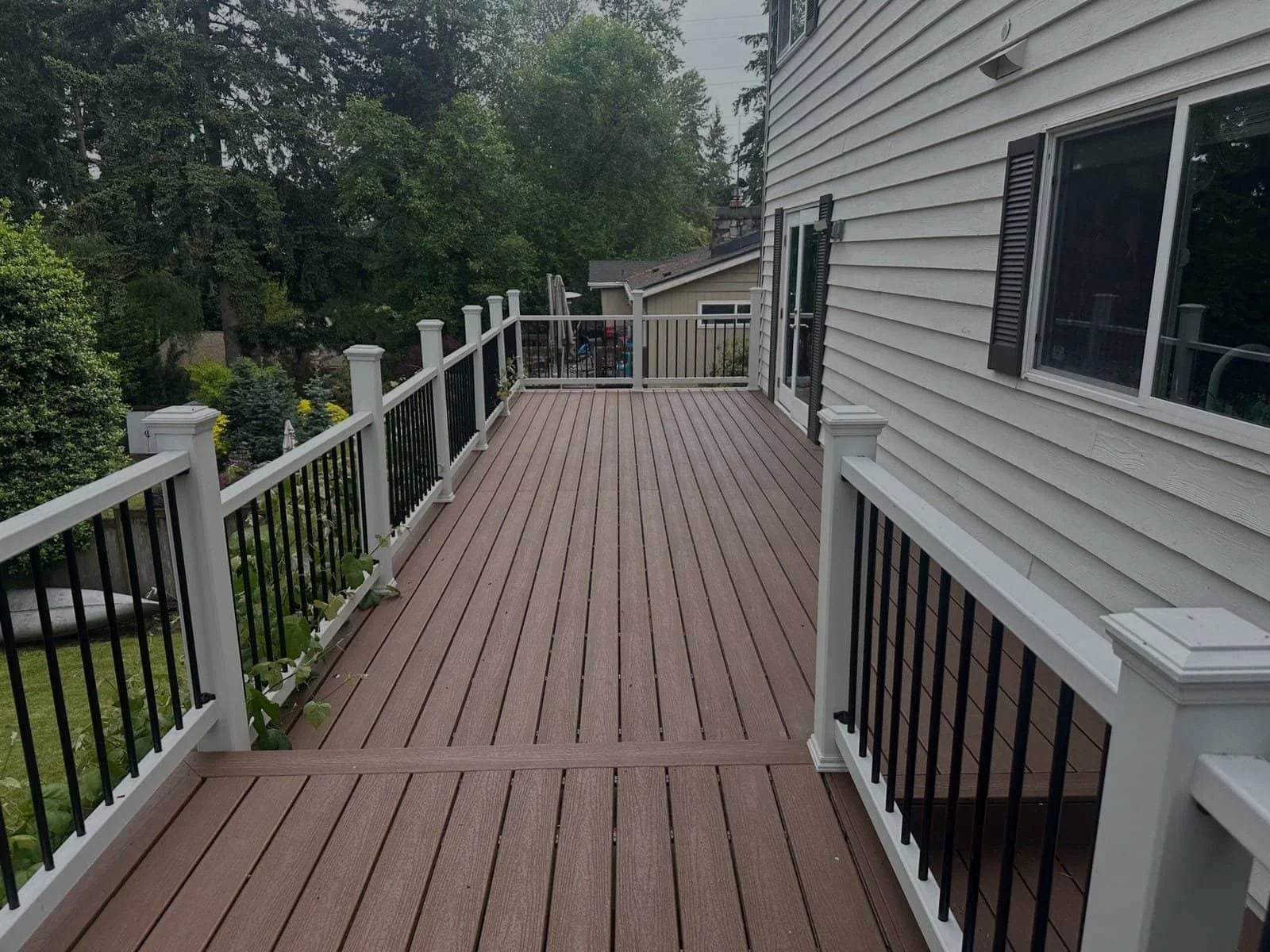
Composite decking is made from a blend of recycled wood fibers and plastic polymers, engineered to resist moisture, fading, and decay. It’s become increasingly popular with Seattle homeowners who want the look of wood without the ongoing maintenance burden.

How Composite Handles Seattle’s Climate

Because composite boards are manufactured rather than grown, they don’t absorb water the way natural wood does. This is a major advantage in a city where your deck may stay damp for weeks at a time. Quality composite boards won’t swell, warp, crack, or rot from moisture exposure. They also resist mold and mildew growth far better than wood, though you’ll still need to wash off surface-level algae once or twice a year.

Modern composite products have also improved dramatically in UV resistance. Earlier generations had issues with significant fading, but current offerings from top manufacturers hold their color much better under sun exposure.

Advantages of Composite Decking

  • Extremely low maintenance. No sanding, staining, or sealing required. An occasional wash with soap and water is all it needs.
  • Outstanding moisture resistance. Won’t rot, warp, or splinter from rain and humidity.
  • Long manufacturer warranties. Many products come with 25- to 50-year warranties against structural defects, staining, and fading.
  • Consistent appearance. No knots, splits, or natural imperfections. Uniform color and texture across every board.
  • Made from recycled materials, giving it strong environmental credentials.
  • Wide range of colors and textures, including options that closely mimic natural wood grain.

Disadvantages of Composite Decking

  • Higher upfront cost. Composite materials and installation typically run 20% to 40% more than cedar.
  • Heat retention. Darker composite colors can get uncomfortably hot in direct sun during July and August. This matters if your deck gets full afternoon sun exposure.
  • Not real wood. Despite improvements, composite still doesn’t feel exactly like natural wood underfoot. Some homeowners notice the difference and prefer the authentic texture of cedar.
  • Difficult to repair. If a board gets damaged, you’ll need to replace it entirely. You can’t sand out scratches or dents like you can with wood.
  • Color fading (budget lines). Lower-end composite products can still fade noticeably over time. Stick with premium lines for the best long-term appearance.

Top Composite Brands to Consider

Trex is the most recognized name in composite decking and offers a solid range from their budget-friendly Enhance line to the premium Transcend series. TimberTech (which includes the Azek line of PVC decking) is known for superior scratch resistance and realistic wood-grain textures. Both brands offer strong warranties and perform well in wet climates like Seattle.

If you’re weighing composite vs cedar deck options, the core tradeoff is clear: composite costs more upfront but saves you money and time on maintenance over its lifetime. Cedar costs less initially but demands regular care to reach its full lifespan potential. For homeowners exploring composite options, our composite decking services page covers what to expect from the installation process.

Cost, Lifespan, and Maintenance Summary

Installed cost $38 to $60 per square foot (materials and labor, depending on brand and tier)
Expected lifespan 25 to 50 years
Maintenance Periodic washing with mild soap and water. No staining, sealing, or sanding needed.

Pressure-Treated Lumber: Pros, Cons, Cost, and Lifespan

Pressure-treated lumber (typically southern yellow pine infused with chemical preservatives) is the budget-friendly workhorse of the decking world. It’s the most affordable option by a significant margin, which is why it remains popular despite its drawbacks.

How Treated Lumber Performs in the PNW

The chemical treatment process forces preservatives deep into the wood fibers, giving the lumber resistance to rot, decay, and insect damage. In drier climates, this treatment works well and treated decks can last a long time. In Seattle’s persistent moisture, though, treated lumber faces more challenges. The wood itself still absorbs water, leading to warping, cupping, and splitting over time. The preservatives prevent rot, but they don’t prevent the physical effects of constant moisture cycling.

Advantages of Pressure-Treated Lumber

  • Lowest upfront cost of any decking material
  • Widely available at every lumber yard and home improvement store
  • Strong and sturdy. Southern yellow pine is denser and harder than cedar, so it resists dents better.
  • Good for substructure. Even if you choose cedar or composite decking boards, pressure-treated lumber is the standard choice for joists, beams, and posts.
  • Takes paint and stain. Can be customized with any color, though you need to wait several months after installation for the wood to dry before finishing.

Disadvantages of Pressure-Treated Lumber

  • High maintenance. Requires sealing or staining every 1 to 2 years to prevent moisture damage and graying.
  • Warping and splitting. Treated lumber is prone to twisting, cupping, and cracking as it dries, especially in its first year.
  • Splinters. More likely to splinter than cedar or composite, which is a concern for families with kids or pets.
  • Chemical content. Modern treatments use micronized copper azole (MCA) or alkaline copper quaternary (ACQ), which are safer than the old arsenic-based CCA treatments but still involve chemicals.
  • Shorter lifespan. Even with maintenance, treated lumber decking typically doesn’t last as long as cedar or composite in Seattle’s wet climate.
  • Less attractive. Has a greenish tint when new and weathers to a dull gray without stain. Doesn’t have the natural beauty of cedar or the clean look of composite.

Cost, Lifespan, and Maintenance Summary

Installed cost $18 to $28 per square foot (materials and labor)
Expected lifespan 10 to 15 years for deck boards in Seattle’s climate (substructure can last longer)
Maintenance Annual cleaning, sealing or staining every 1 to 2 years, periodic board replacement as splitting occurs

Pressure-treated lumber makes sense when budget is the primary concern, or for portions of a deck that aren’t visible (like the framing underneath). For the actual deck surface in Seattle, it’s the most demanding option in terms of ongoing care.

Deck Material Comparison Table

Here’s a side-by-side look at how cedar, composite, and pressure-treated lumber stack up across the factors that matter most to Seattle homeowners:

Factor Cedar Composite Pressure-Treated Lumber
Installed Cost (per sq ft) $28 – $42 $38 – $60 $18 – $28
Lifespan 15 – 25 years 25 – 50 years 10 – 15 years
Maintenance Level Moderate (stain/seal every 1–3 yrs) Low (occasional washing) High (seal/stain every 1–2 yrs)
Appearance Natural, warm wood grain Uniform, wood-look options Plain, greenish when new
Weather Resistance Good (natural oils resist rot) Excellent (won’t absorb water) Moderate (resists rot, not warping)
Best Use Case Homeowners who want natural beauty and will maintain regularly Homeowners who want low maintenance and long-term value Budget projects, secondary structures, or deck framing

Our Recommendation for Seattle Homeowners

After years of building decks across the Seattle metro area, we’ve seen firsthand how each material performs. There’s no single best deck material for every Seattle homeowner, but there is a best material for your situation.

After building and renovating decks across the Seattle metro area for years, here’s our honest take on which material to choose, based on your priorities:

If Low Maintenance Is Your Top Priority: Go Composite

When it comes down to it, composite decking is the best long-term investment for most Seattle homeowners. You won’t spend weekends staining, you won’t worry about rot, and you’ll get decades of use from your deck with minimal effort. The higher upfront cost pays for itself when you factor in the stain, sealant, and labor hours you’d spend maintaining wood over 20+ years. If you can afford the initial investment, composite is the best decking for Pacific Northwest conditions.

If You Love Natural Wood and Don’t Mind Maintenance: Choose Cedar

There’s something about a freshly stained cedar deck that composite simply can’t replicate. The warmth, the texture, the way it connects your outdoor space to the natural surroundings. If you enjoy the ritual of caring for your deck and want that authentic wood experience, cedar is a fantastic choice. Just go in with realistic expectations about the maintenance commitment.

If Budget Is the Deciding Factor: Consider Treated Lumber (With a Plan)

Pressure-treated lumber gets you a functional deck at the lowest cost. If you’re working with a tight budget and you’re disciplined about annual maintenance, a treated deck can serve you well for 10 to 15 years. Just understand that you may end up replacing it sooner than cedar or composite, which affects the total cost of ownership. For many homeowners, treated lumber works best as a "starter deck" with plans to upgrade later.

The Smart Hybrid Approach

Many of the decks we build use a combination: pressure-treated lumber for the structural framing (where it excels and remains hidden), with cedar or composite for the visible deck surface and railings. This approach gives you the best performance where it counts while keeping costs reasonable. If you’re considering a new build or a deck renovation in the Bellevue area, this hybrid method is worth discussing with your contractor.

Think About Resale Value

If you’re planning to sell your home within 5 to 10 years, composite decking typically offers the best return. Buyers in the Seattle market appreciate the low-maintenance appeal and the long warranty. Cedar is also a strong selling point, especially for buyers who value natural materials. Treated lumber, while functional, doesn’t add the same perceived value.

Other Factors to Consider Before You Build

Material selection is the biggest decision, but a few other factors will affect your deck’s performance and your satisfaction with it:

  • Deck orientation. A south-facing deck gets more UV exposure and heat, which matters more with composite. A north-facing, shaded deck is more prone to moss and moisture retention, which is tougher on wood.
  • Ventilation underneath. Proper airflow beneath your deck helps all materials dry faster and last longer. Make sure your design allows for adequate ground clearance and ventilation.
  • Local building codes. Seattle and surrounding municipalities have specific requirements for deck construction, including structural specifications, railing heights, and permit requirements. An experienced general contractor will handle all of this for you.
  • Fastener compatibility. Different materials require different fastening systems. Composite boards often use hidden clip systems, while wood decking uses screws. The right fasteners prevent surface damage and improve the finished appearance.

Frequently Asked Questions About Deck Materials in Seattle

What is the best deck material for rainy climates?

Composite decking is the best choice for rainy climates like Seattle’s. It doesn’t absorb water, won’t rot or warp from moisture, and resists mold and mildew better than any wood option. If you prefer natural wood, western red cedar is the next best option thanks to its natural oils that resist decay.

Is composite decking better than cedar?

It depends on your priorities. Composite is better for low maintenance, longevity, and moisture resistance. Cedar is better if you want authentic wood beauty and don’t mind spending time on regular upkeep. Over a 25-year period, composite typically costs less in total because you avoid ongoing staining and sealing expenses.

How long does a cedar deck last in Seattle?

A well-maintained cedar deck in Seattle typically lasts 15 to 25 years. The key word there is "well-maintained." If you clean, sand, and reseal your cedar deck every 1 to 3 years, it will hold up well. Without maintenance, cedar can deteriorate in as few as 8 to 10 years in Seattle’s wet climate.

What is the most low-maintenance decking option?

Composite decking is far and away the lowest-maintenance option. It requires no staining, sealing, or sanding. The only regular maintenance is washing it once or twice a year with soap and water to remove dirt and any surface-level algae. That’s it.

Which deck material adds the most home value?

Composite decking tends to add the most perceived value for Seattle home buyers because of its durability, appearance, and low maintenance reputation. Cedar also adds strong value, especially in neighborhoods where natural materials are prized. According to industry data, a well-built deck typically recoups 60% to 80% of its cost at resale.

Can pressure-treated wood be used for a deck surface?

Yes, pressure-treated lumber can be used as a deck surface, and it’s the most affordable option. However, it requires more maintenance than cedar or composite, is more prone to warping and splintering, and has a shorter lifespan for surface boards (10 to 15 years in Seattle). It’s most commonly used for the structural framing beneath the visible deck surface.

How much does it cost to build a deck in Seattle?

The total cost depends on size, material, design complexity, and site conditions. As a general range, most residential decks in the Seattle area cost between $15,000 and $30,000 for a standard build. A 300-square-foot composite deck might run $12,000 to $18,000 for materials and labor, while cedar would be slightly less and treated lumber would be the most affordable. For a precise estimate based on your project, request a free consultation with our team.

Can I install deck boards myself, or should I hire a contractor?

While pressure-treated lumber is the most DIY-friendly option, proper deck construction involves structural framing, joist spacing, fastener selection, and local building code compliance. A poorly built deck can be a safety hazard and may void material warranties. For composite and cedar decks especially, professional installation ensures correct ventilation, drainage slope, and hidden fastener systems that protect your investment. If you want expert help, our Seattle deck building team handles everything from permits to the final walkthrough.

Article details:

Share: